The GRE General Test is recognized as the most widely accepted admissions exam for graduate-level programs. This includes fields like business, law, and various academic disciplines. For many aspiring students, registering for this exam is the crucial first step toward achieving their academic goals.
With over 1,000 test centers across more than 160 countries, the GRE is accessible year-round. It lasts approximately 1 hour and 58 minutes and comprises three sections: Analytical Writing, Quantitative Reasoning, and Verbal Reasoning. Achieving a maximum score of 170 in both the Verbal and Quantitative sections can open doors to thousands of institutions.
At testhelper, we simplify the entire registration process. Our expert guidance helps you navigate from creating your ETS account to selecting your test date. This comprehensive guide covers everything you need to know, ensuring you avoid costly mistakes and feel confident on your GRE journey.
Whether you’re aiming for a master’s, doctoral, or professional program, partnering with testhelper ensures a seamless registration experience.
Key Takeaways
- The GRE is essential for graduate admissions.
- Registration is the first step toward academic advancement.
- Testhelper offers expert support for the registration process.
- The GRE consists of three key sections.
- Test centers are available worldwide, with flexible scheduling.
- Our guide helps you prepare for test day confidently.
Understanding the GRE General Test
Recognized globally, the GRE General Test plays an essential role in graduate school admissions. This standardized exam is designed and administered by ETS, serving as a common criterion for comparing applicants from diverse academic and professional backgrounds. Thousands of graduate schools, business schools, and a growing number of law schools accept GRE scores, making it one of the most versatile admissions tests available.
The GRE General Test consists of three core sections:
- Analytical Writing: Assesses critical thinking and analytical writing skills over 30 minutes.
- Quantitative Reasoning: Measures basic math concepts in arithmetic, algebra, and geometry over 47 minutes.
- Verbal Reasoning: Evaluates college-level vocabulary and verbal reasoning over 41 minutes.
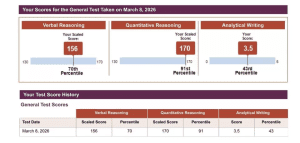
Understanding the scoring system is crucial. Verbal and Quantitative scores range from 130-170, while Analytical Writing scores range from 0-6. Some test takers may also encounter an unscored experimental section. The GRE is a computer-adaptive test, meaning the performance on the first section influences the difficulty of the second section, impacting scoring potential.
GRE scores hold significant weight in graduate admissions. While they are just one part of a holistic application, many programs emphasize GRE scores heavily or set minimum score thresholds. Furthermore, GRE scores remain valid for five years, allowing test takers flexibility in planning their graduate school application timeline.
As a trusted resource, testhelper provides comprehensive information about the GRE General Test. We help prospective graduate students navigate the test structure and understand its role in admissions, ensuring informed decisions.
| Section | Duration | Score Range |
|---|---|---|
| Analytical Writing | 30 minutes | 0-6 |
| Quantitative Reasoning | 47 minutes | 130-170 |
| Verbal Reasoning | 41 minutes | 130-170 |
Why Sign Up to Take the GRE?
For those seeking advanced degrees, the GRE is an essential gateway to success. This test is not just a requirement; it opens numerous opportunities for students aiming for graduate, business, and law schools.
Many graduate programs across the United States accept the GRE General Test. This includes master’s and doctoral degrees, making it a versatile choice for applicants. A strong GRE score can enhance your application, complementing other factors like GPA and personal statements.
Graduate, Business, and Law School Opportunities
The GRE General Test is increasingly recognized by business schools as an alternative to the GMAT. This flexibility allows candidates to explore dual-degree programs or multiple academic paths without being limited to one exam.
Moreover, some law schools are now accepting GRE scores in lieu of LSAT scores. This shift broadens options for prospective law students, making it easier to apply to various programs.
How the GRE Opens Doors to Your Academic Future
The GRE provides a standardized metric for admissions committees. It allows them to evaluate applicants from diverse educational backgrounds on a level playing field. This is crucial in today’s competitive academic landscape.
In addition, a strong GRE score can also be a key factor for fellowship and scholarship considerations. This makes the GRE a valuable investment in your academic and professional future.
At testhelper, we are dedicated to helping you navigate the GRE sign-up process. Our expert guidance ensures you understand which programs accept the GRE and how to target competitive scores. Together, we can unlock your potential and pave the way for your academic journey.

Creating Your ETS Account for GRE Registration
Creating an ETS account marks the beginning of your journey towards GRE registration. This account is essential for managing all aspects of your GRE experience. From scheduling your test to viewing scores, everything is handled through this centralized portal.
Here’s a step-by-step guide to help you set up your ETS account effectively:
Setting up your account step-by-step
- Navigate to the official ETS website.
- Click on the “Create an Account” option.
- Enter accurate personal information that matches your identification documents.
- Create secure login credentials.
- Verify your account via the email confirmation link sent by ETS.
It’s crucial that the name, date of birth, and other personal details you enter match the identification documents you will present on test day. Any discrepancies can lead to denied admission to the test.
Benefits of managing your registration through ETS
Managing your GRE registration through your ETS account offers several key advantages:
- Schedule, reschedule, or cancel your test appointment easily.
- Access official GRE preparation materials and practice tests.
- View your scores online approximately 10-15 days after your test date.
- Order additional score reports for graduate programs.
- Apply for the GRE Fee Reduction Program and request disability accommodations.
- Utilize the GRE Search Service to connect with graduate and business school recruitment opportunities.
At testhelper, we guide you through every screen of the ETS account creation process. Our expertise helps you avoid common errors that could delay your GRE registration or create issues on test day.
| Feature | Description |
|---|---|
| Account Creation | Mandatory for GRE registration and management. |
| Score Viewing | Scores available online 10-15 days post-test. |
| Test Scheduling | Flexible options for scheduling, rescheduling, or canceling. |
| Preparation Materials | Access to official GRE preparation resources. |
| Fee Reduction | Application for GRE Fee Reduction Program available. |
Choosing Your GRE Test Location: Test Centers or Home Testing
Selecting the right location for your GRE test can significantly influence your performance. You have two primary options: taking the GRE General Test at a Prometric test center or opting for the at-home testing solution. Both choices provide a computer-delivered GRE experience, but they come with different requirements and environments.
Finding and selecting nearby test centers
To find a suitable test center, use the ETS test center search tool. This tool allows you to filter by geographic location, available test dates, and appointment times. Here’s how to use it:
- Visit the official ETS website.
- Access the test center search tool.
- Enter your location and desired test date.
- Review the list of available test centers and select the most convenient option.
Home testing requirements and considerations
Home testing is a flexible option, but it comes with specific requirements. Ensure your environment meets the following:
- A quiet, private room with a door.
- A reliable computer that meets ETS hardware and software specifications.
- A stable internet connection.
- A webcam and a microphone.
- A testing environment free from prohibited items, such as notes or electronic devices.
Additionally, ID requirements may vary based on your testing location and country of citizenship.
Comparing convenience and test day environment
When comparing test centers and home testing, consider the following:
- Test Centers: Provide a controlled, proctored environment with all necessary equipment. This can help reduce distractions and anxiety on test day.
- Home Testing: Offers flexibility in scheduling and the comfort of a familiar space. However, you must ensure your equipment and environment meet all ETS requirements.
Think about factors like ambient noise, lighting, and potential interruptions. These elements can significantly impact your GRE performance, so choose a location where you can focus and feel at ease.
At testhelper, we assist you in evaluating both testing options. Our resources include detailed checklists for both test center and home testing preparation. This ensures a smooth experience on your chosen test date.
GRE Registration Process Explained: Sign up to Take the GRE
Navigating the GRE registration process is crucial for prospective graduate students. Completing this process accurately ensures that you can schedule your exam and prepare for the next steps in your academic journey. Here’s a detailed breakdown of how to register online through your ETS account.
How to register online through your ETS account
Registering for the GRE General Test is done entirely online through your ETS account. Follow these steps for a smooth registration:
- Log in to your ETS account.
- Select the GRE General Test option.
- Choose between taking the test at a Prometric test center or opting for at-home testing.
- Proceed through each screen, confirming your appointment details.
Scheduling your test date and appointment details
When scheduling your test date, you have flexibility. GRE test dates are available most weekdays and weekends throughout the year. Here’s what to keep in mind:
- Appointments at test centers can fill quickly, especially during peak times.
- At-home testing appointments are available around the clock, providing more options for scheduling.
Important registration deadlines and rules
It’s essential to register well in advance of your desired test date. Walk-in registration is not permitted. Here are key points to remember:
- Registration must be completed online through your ETS account.
- Ensure that your personal information matches your ID documents exactly.
- You can select up to four graduate programs to receive your scores at no extra cost.
- The GRE test fee is $220 in most locations.
Changes to your appointment can incur fees if made less than four days before the test date. Be aware that changes closer to the test date may result in forfeiture of the full test fee.
As you embark on this journey, testhelper is here to guide you. We provide detailed instructions, deadline reminders, and expert tips to help you avoid common registration errors. This way, you can secure your ideal test appointment with confidence.
Fees, Accommodations, and Important Policies
Before committing to a test date, it’s vital to grasp the fees and policies associated with the GRE. Understanding these aspects can help you plan effectively and avoid unexpected costs.
Understanding GRE test fees and fee reduction options
The GRE General Test costs $220 in most locations within the United States. This fee covers the test itself, but there are additional costs for various services:
- Rescheduling your test date incurs a fee of $50.
- Changing your test center also costs $50.
- Ordering additional score reports beyond the four free recipients included with registration incurs a fee of $27 each.
For those facing financial challenges, the GRE Fee Reduction Program offers a 50% reduction on the test fee. Eligible test takers must demonstrate financial need or be currently unemployed. To apply, submit the GRE Fee Reduction Request Form through your ETS account for approval before registering.
Requesting disability accommodations
Test takers with documented disabilities or health-related needs can request accommodations. This may include extended testing time, extra breaks, or screen magnification. To request these accommodations, you must submit the Bulletin Supplement for Test Takers with Disabilities and the GRE Test Authorization Voucher Request Form well in advance of your intended test date.
Canceling, rescheduling, and retaking policies
It’s important to understand the policies regarding canceling or rescheduling your GRE test appointment:
- Registration must be completed online through your ETS account.
- Changes made less than four days before the test date may incur fees.
- If you fail to appear for a scheduled test without proper cancellation, you will forfeit the full test fee.
The GRE General Test can be retaken once every 21 days, up to five times within any continuous rolling 12-month period. This policy applies even if scores from a previous test were canceled.
At testhelper, we ensure that students are fully informed about all GRE-related costs, financial assistance options, and critical policies before they commit to a test date. Our resources help you navigate these aspects smoothly, empowering you to make informed decisions.
Preparing for Test Day: Equipment and Environment Requirements
Preparing for the GRE requires careful attention to both equipment and the testing environment. Whether you choose to take the test at home or at a test center, being well-prepared can make a significant difference in your performance.
Computer and software specifications for testing
For at-home testing, ensure your computer meets the following specifications:
- Your device must be a desktop or laptop, not a tablet or mobile device.
- It should run a supported operating system, either Windows or Mac.
- A functioning webcam and microphone are essential for the online proctoring process.
- Lastly, download and install the ETS Secure Test Browser prior to test day.
Creating an optimal testing environment
Setting up your testing environment is crucial. Here are the key requirements:
- Your testing room must be quiet and private, with a door that can be closed.
- Ensure a clear desk or table surface free from prohibited items, such as notes and electronic devices.
- Good lighting is necessary for the proctor to observe you throughout the exam.
Whether at home or in a test center, minimize background noise and ensure comfortable seating. Adjust the room temperature to your preference, and eliminate potential interruptions from family members or pets.
What to expect on test day
On test day at a Prometric test center, arrive at least 30 minutes before your scheduled appointment. Bring valid identification that matches the name on your ETS account exactly. You will store personal belongings in a designated locker and must follow all proctor instructions throughout the session.
If testing at home, log into your ETS account and complete a system check. Present your identification to the online proctor via webcam and perform a room scan to confirm your environment meets all requirements before the GRE begins.
At testhelper, we provide detailed checklists and expert advice to ensure you are fully prepared for test day. Whether you are testing at home or at a test center, our resources will help you arrive at your chosen location confidently.
Retaking the GRE: Policies and Recommendations
Retaking the GRE can be a strategic move for those aiming to improve their scores. Understanding the policies surrounding retakes is crucial for effective planning.
Limits on retakes and timing between exams
Test takers can retake the GRE General Test once every 21 days, up to a maximum of five times within any continuous rolling 12-month period. This policy is strictly enforced, even if previous scores were canceled. If a violation is identified before the test date, the appointment will be canceled, and fees will be forfeited. If it occurs after scores are reported, invalid scores will be canceled, and recipients will be notified.
Strategies for improving your score
When considering a retake, allow sufficient time for targeted preparation. Ideally, wait four to eight weeks between attempts. Rushing to retake the exam at the minimum 21-day interval without meaningful prep may not yield better results.
Here are some effective strategies for score improvement:
- Analyze your previous score report: Identify weaknesses in Verbal, Quantitative, or Analytical Writing sections.
- Use official GRE prep materials: Focus on areas needing improvement through practice tests.
- Consider structured prep courses: These provide accountability and expert guidance.
Remember, GRE scores remain valid for five years. This allows you to plan multiple attempts over time to reach your target score for competitive graduate, business, or law school applications.
At testhelper, we offer diagnostic tools, personalized study plans, and expert advice to help you maximize your score improvement between attempts. Together, we can ensure you achieve your academic goals.
Conclusion
Embarking on the journey of the GRE General Test is crucial for aspiring graduate students. This exam is not just a requirement; it serves as an essential benchmark for evaluating candidates seeking admission to various programs. Understanding the test structure, creating your ETS account, and selecting the right test location are all vital steps in this process.
With over 1,000 test centers and convenient at-home options, you can choose what works best for you. Careful attention to registration deadlines, fees, and policies will ensure a smooth experience. A well-planned strategy, including thorough preparation and knowledge of ETS requirements, can significantly enhance your chances of achieving competitive scores.
At testhelper, we are committed to supporting you at every stage of your GRE journey. From registration to test day preparation, our resources simplify the process. For expert guidance and comprehensive support, visit testhelper.org today and set the foundation for your academic success.
FAQ
What is the GRE and who uses it?
The GRE, or Graduate Record Examination, is a standardized test widely used for admissions to graduate programs. It is accepted by various institutions, including business, law, and other graduate schools, as a measure of academic readiness.
What sections are included in the GRE General Test?
The GRE General Test consists of three main sections: Verbal Reasoning, Quantitative Reasoning, and Analytical Writing. Each section assesses different skills relevant to graduate-level work.
How is the GRE scored?
Scores for the GRE range from 130 to 170 for the Verbal and Quantitative sections, with a separate score for the Analytical Writing section ranging from 0 to 6. Most schools consider these scores in their admissions process.
Why should I register for the GRE?
Registering for the GRE opens up opportunities for graduate, business, and law school programs. A strong score can enhance your application and provide a competitive edge in the admissions process.
How do I create an ETS account for GRE registration?
To create an ETS account, visit the official ETS website, click on the GRE section, and follow the prompts to enter your personal information. This account will allow you to manage your registration and test details.
What are the options for GRE test locations?
You can choose between designated test centers or opt for home testing. Both options have specific requirements and can be selected based on your convenience and preference.
What should I know about the GRE registration process?
The registration process involves creating an ETS account, selecting a test date, and paying the registration fee. Be mindful of important deadlines to ensure you secure your desired appointment.
What fees are associated with the GRE?
GRE test fees vary based on location and services. Fee reduction options are available for eligible test takers. It’s essential to review the ETS website for the most current fee structure.
How can I request accommodations for the GRE?
To request accommodations, you must submit a request through your ETS account, providing documentation of your disability. This process ensures that you receive the necessary support on test day.
What equipment and environment are required for the GRE?
For home testing, you need a computer that meets specific software and hardware requirements. Additionally, create a quiet, distraction-free environment to optimize your performance on test day.
What are the policies for retaking the GRE?
You can retake the GRE once every 21 days, up to five times within a rolling 12-month period. It’s advisable to develop a study plan to improve your scores before retaking the exam.